- flash is a dynamic medium--it can change during playback (at "runtime")
- the ability to change on a per-view basis sets the flash medium apart from print and tv.
- print and tv broadcast the same experience to all audience members, whereas flash can alter the experience for each individual.
- "randomation" is dynamic runtime content.
- design (motionless visuals)
- animation
- sound
- narrative
- key features of randomation:
- content changes each time it is viewed
- content changes while it is viewed by reacting to environment variables (e.g., user interaction, simulated physics)
- usually we think of "graphic design" as planning and creating a specific visual layout.
- to produce randomation, we create not a specific image but a range of images; not an experience but a range of experiences.
- randomation specifies the boundaries within which any given experience must occur.
- for example, in static design, many boundaries are spatial: placement of visual elements (left, right, top, and bottom limit) minimum/maximum size of visual elements, etc.
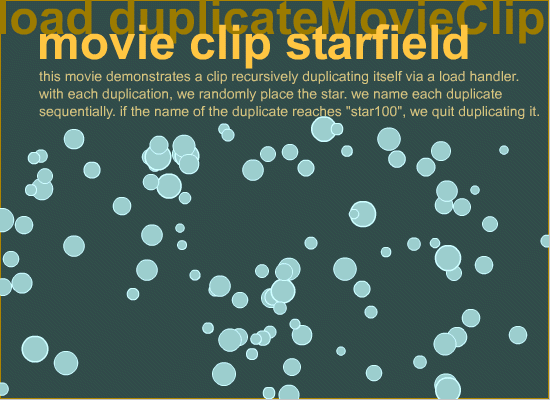
- circles randomly positioned and sized
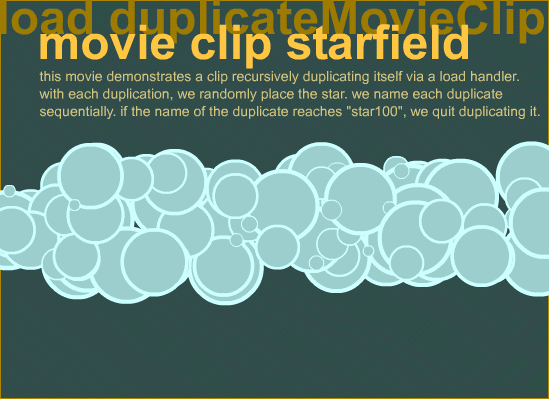
- we design the randomation by changing the system's boundaries
- demo: loadevent-starfield.fla
- select star1 clip
- set randomX to 150
- set xOffset to 200
- ...then set randScale to 1000
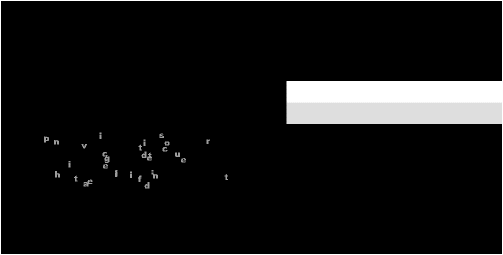
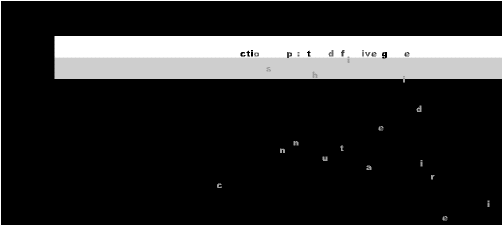
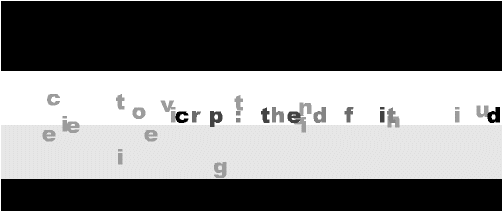
- each letter starts in a random location
- each letter animates with random characteristics
- each letter ends in a uniform location, relative to a random position
- fresh/unique each visit (doesn't go stale quickly like a television commercial)
- provides long-term experience...takes time to discover features
- produces unexpected emergent effects
- adds a "living" quality...the content, itself, is live. (contrast with "live" television, where "live" refers to the time of the broadcast.)